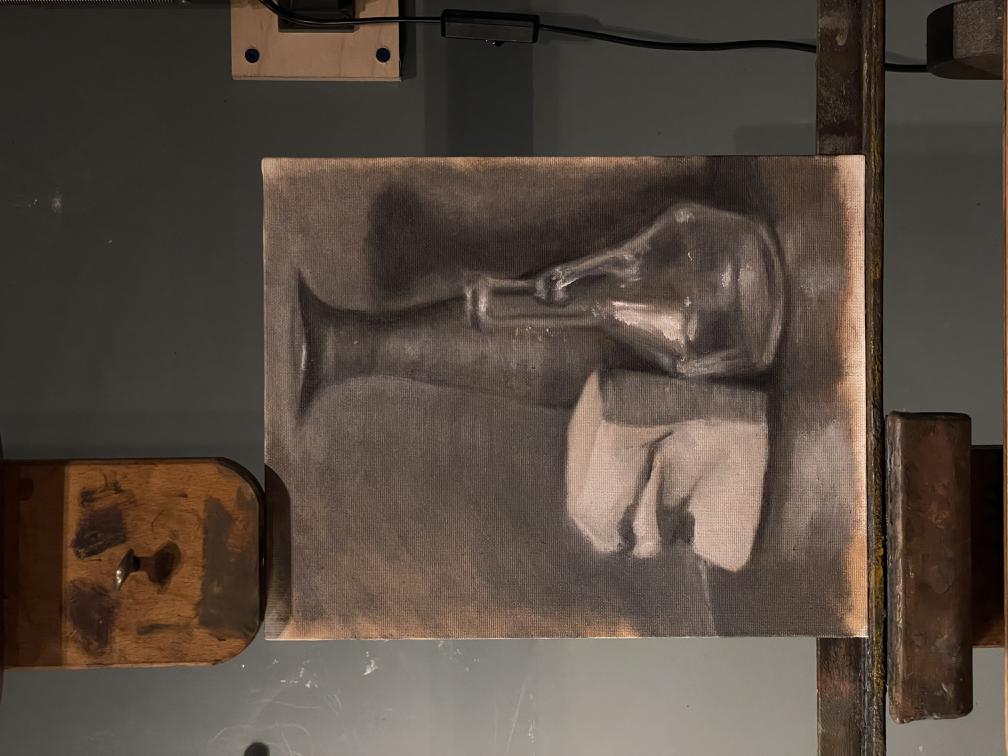
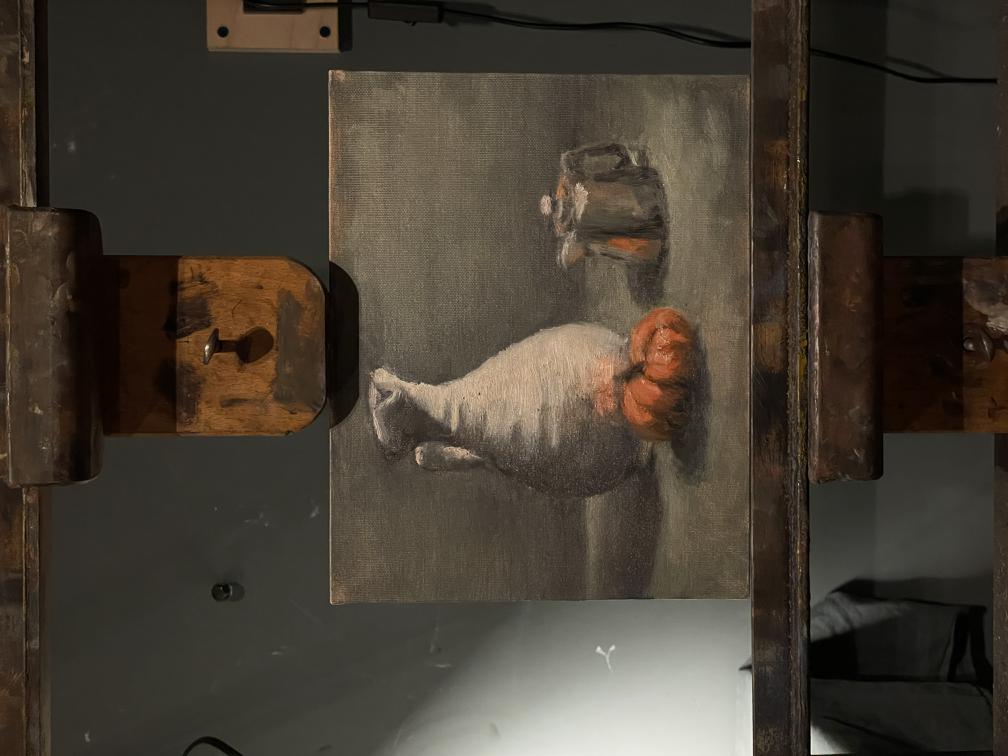
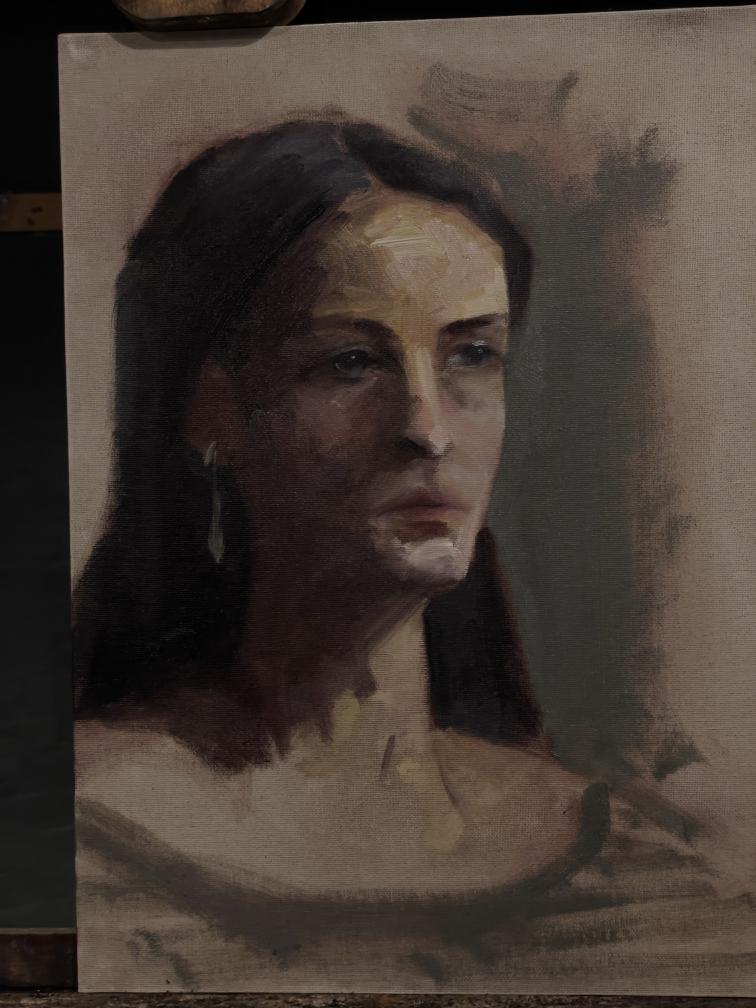
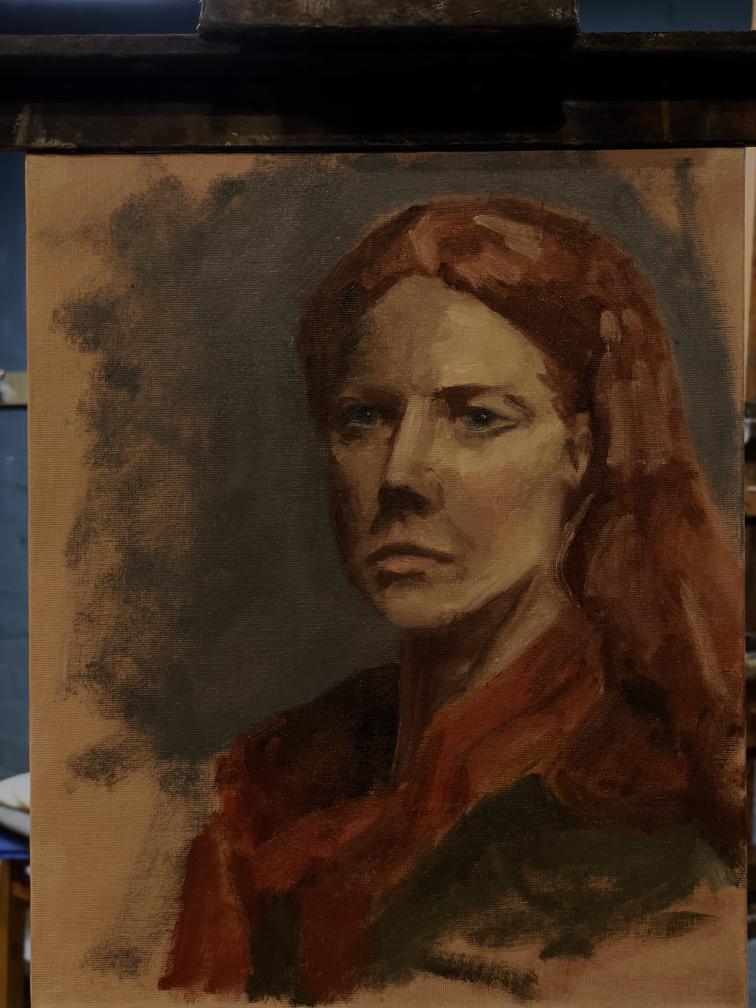
In December 2025, I attended some short, foundation courses at London Fine Art Studios. I did a week long foundation in still life that covered shape, proportion, light, and colour, progressing from charcoal, to grisaille oil, to full colour oil painting. I then did a second week that followed the same format but focusing on live model portraiture as opposed to still life compositions.
Then in May 2026 I went back to LFAS for a week long course taught by Patrick Byrnes. This was also portrait specific but instead of the alla prima method of my foundations, we spent the full 5 days on a single pose.
Day 1
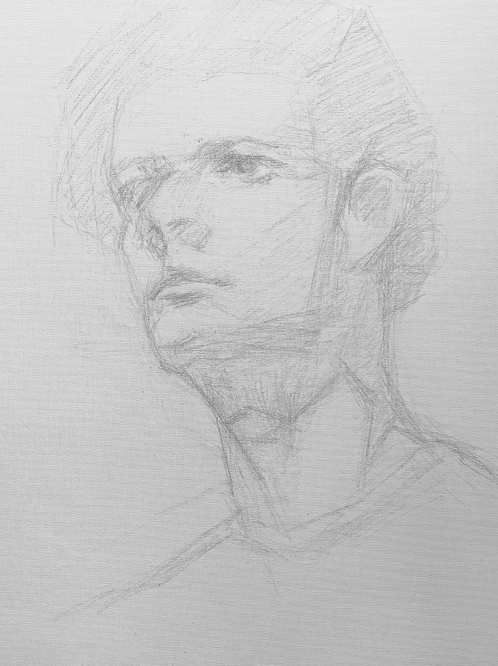
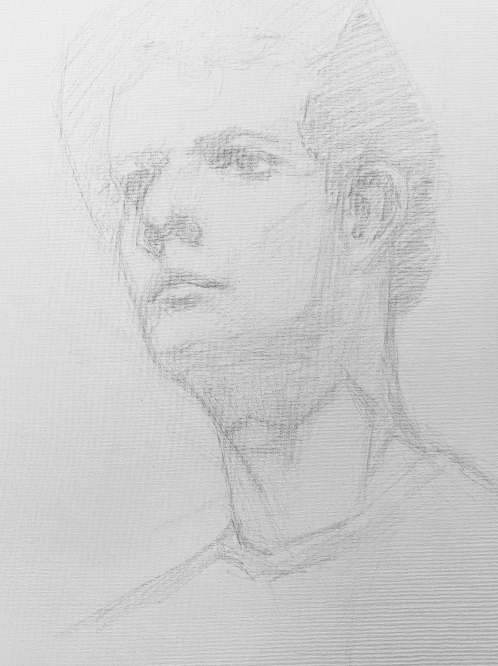
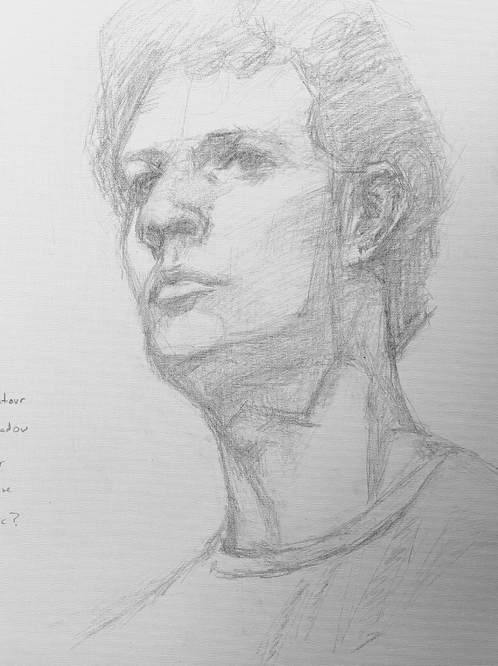
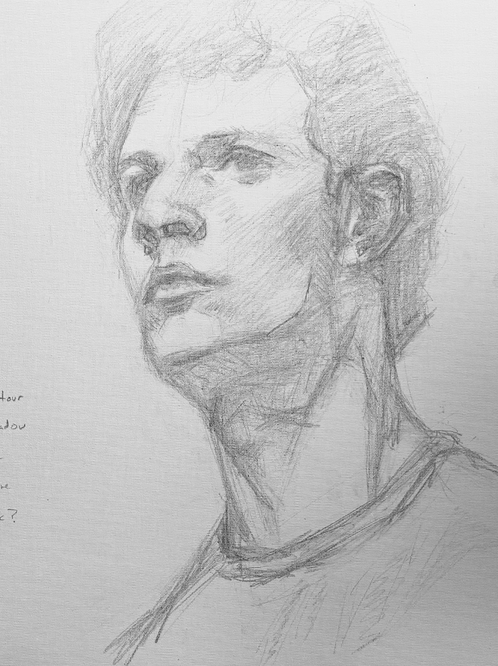
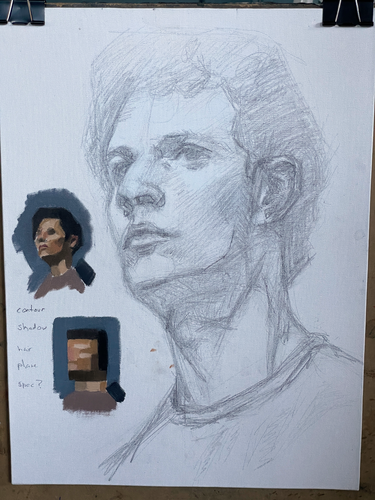
The focus of the first day was drawing. Patrick suggested working in pencil as opposed to paint to give us more access to detail. Starting with a rough block in, thinking optically, it was a process of discovery and learning. The core objectives for the day were:
- proportion
- does our drawing match the model
- is the likeness working?
- structure
- does the drawing feel anatomically correct?
- is it physically plausible regardless of likeness?
- gesture
- pose
- rotation
- pitch
- tilt
- track how these change as the model moves between 20 min poses
We are squeezing, compressing & designing reality in our drawing. It’s down to taste and there’s really no “correct” way to do it. Once we have a rough block in we can start to measure - but keeping it limited to vertical half, and width to height ratio. By separating the process out into lots of little steps that we can focus on one at a time, we’re trying to save our brain.
Once we’re happy with the first phase of the block in, we can start to map out lighting events in our drawing. These break down into more or less 5 possible things:
- contour
- silhouette
- edges of form
- overlap
- this is all very specific to our point of view
- shadow shape
- this is drawing the point of view of the light source
- finding terminators and cast shadow angles
- mapping the division of light and shadow
- hair shape
- finding the different hair textures
- volumes of hair
- thinking about how we will interpret the hair in our painting
- plane changes
- areas of change in the surface
- this is anatomical detail
- areas of half tone and turning form
- speculars
- not necessary to draw these in but maybe draw around them?
- glare and highlights
We should think about these events as we draw them. Think of their purpose and source: why are they happening and what 3d shapes do they represent?
This whole process is drawing a map that will make the rendering easier when we start painting.
Day 2
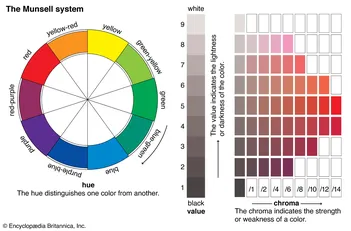
The focus of the second day was colour. It was a very theory focused day with not much painting. We learnt how to think and talk about colour in terms of hue, value, and chroma according to the Munsell colour system. This is a more specific way to talk about colour and changes in colour than words like “warmer”, “cooler”, “brighter”, etc. Instead we can ask questions about hue, saturation and value separately and investigate how they change as we move across the subject.
We also talked about how to see the subject as one, continuous, fluid transition as opposed to discrete zones. This was to help protect ourselves from optical illusions like simultaneous contrast. We should use our understanding of light and form to interpret what we see, trying to avoid working by perceived difference. It is an 80% perceptual/reactive process and 20% analytical.
The goal of the day was to make several studies by mixing 5-10 colours that make up the general impression of the subject. This was to puzzle out the major colour relationships. We were looking to find colours for:
- hair
- background
- major shadow shapes
- average lit skin
- a bridge between the shadow and the light
Hue was less important to these studies as skin is always somewhere between yellow and red. We were mixing all of these colours to give ourselves context - analysing our shadow colour only makes sense when we relate it to the hair, background, lit skin, etc. In general we want more variation in the lights than the darks at this stage and we’re not looking for a 1-1 correspondence but an interpretation of the hue/value/chroma changes across the subject.
Day 3
We mostly work optically - seeing and interpreting - and the choices we make as we paint will be both conscious and un-conscious. But we have lots of optical biases and we need to equip ourselves with some conceptual knowledge to counteract these. Colour theory, anatomical knowledge and an understanding of perspective will all help us see with our minds as well as our eyes.
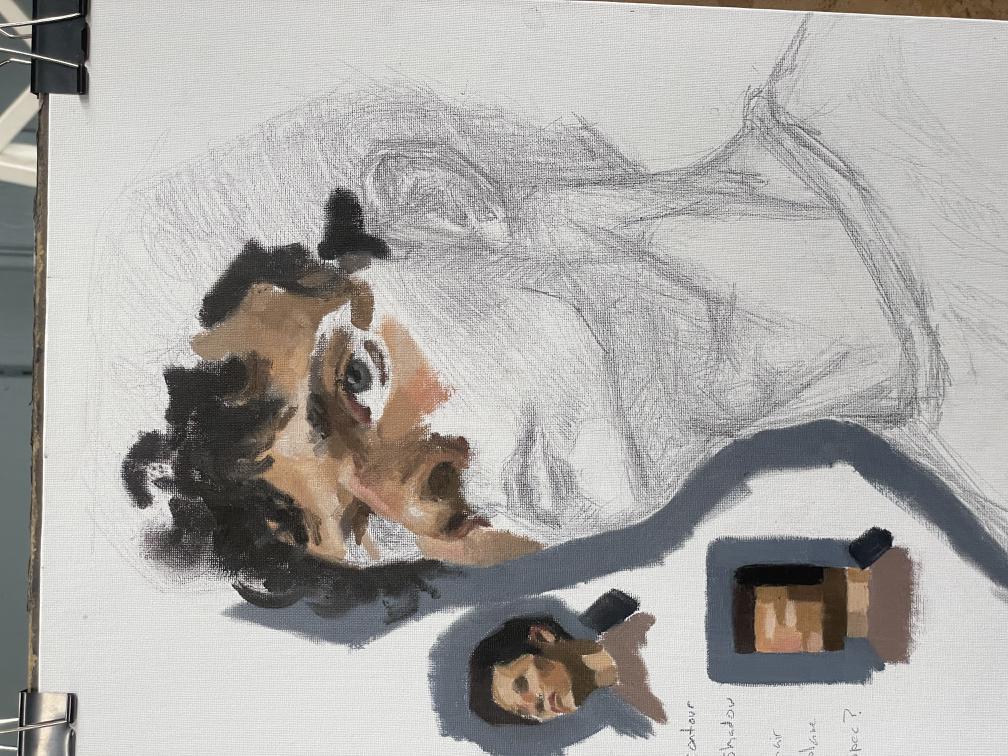
On the third day we started the form pass. we would continue to develop drawing as we paint but the focus should now be on the illusion of dimensionality by finding the gradation of values and designing the lights and darks. There are 3 players in the game:
- me the observer
- my literal perspective on the subject
- my biases and conceptual knowledge
- the subject
- his pose and anatomy
- the light
- which has it’s own anatomy of diffuse/specular/sss/etc.
Working slowly, thinking and conceptualising as I go, I worked in a stripe across the face.
Day 4 & 5
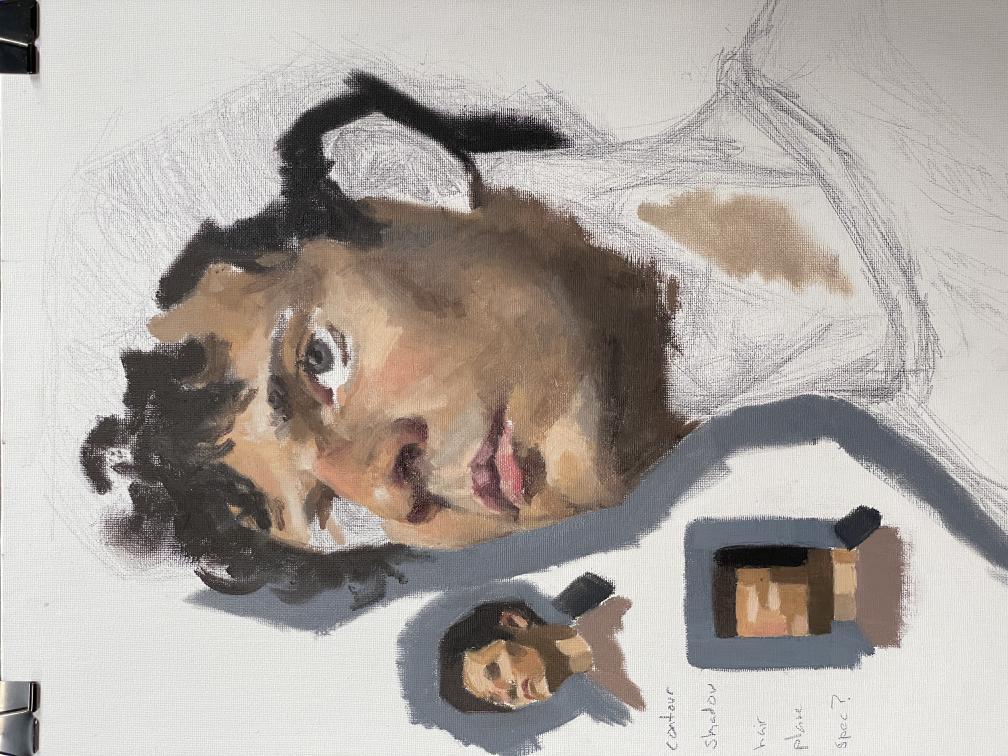
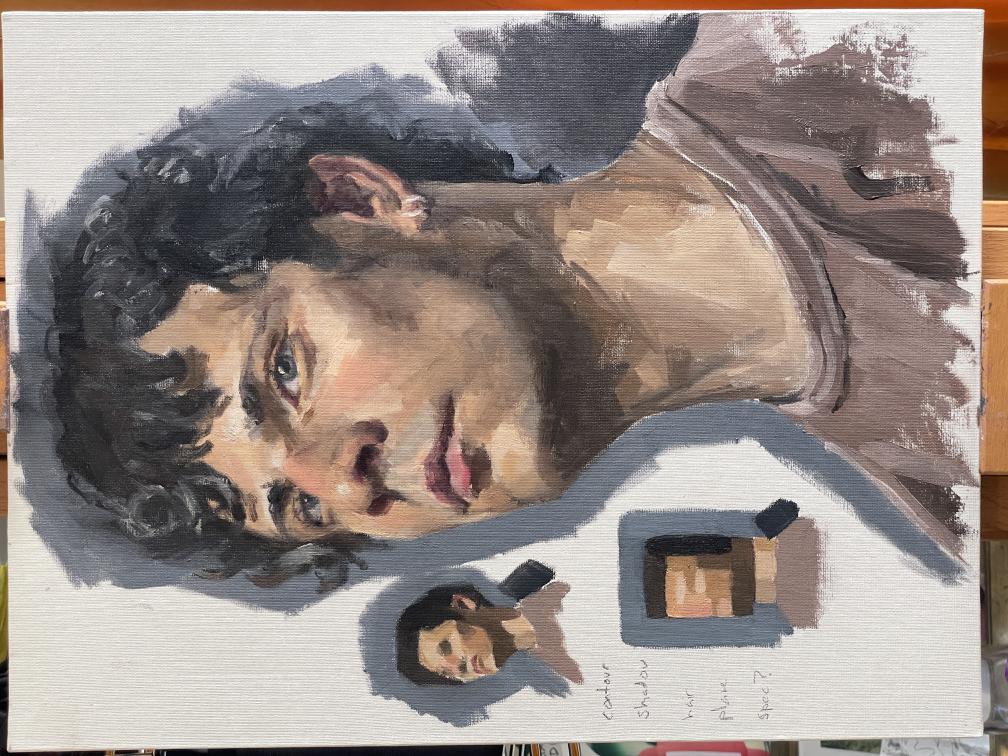
On the 4th and 5th days we continued to work on the painting, filling in form area by area with very little theory from Patrick